Vented vs Non-Vented Chest Seals: Clinical Comparison & TCCC Field Triage Guide
Treating penetrating thoracic trauma requires an acute clinical choice between Vented and Non-Vented occlusive chest seals. A Non-Vented seal establishes a 100% hermetic barrier across the wound wall, but carries a documented risk: if the injured lung parenchyma continues to leak air into the pleural space, trapped air pressure can escalate rapidly, transforming an open pneumothorax into a fatal tension pneumothorax. A 3-Channel Vented Chest Seal solves this by incorporating one-way laminar relief valves that automatically vent positive pleural pressures during casualty exhalation while preventing ambient air ingress during inhalation. Ruten Medical manufactures both configurations with medical hydrogel proven to adhere from -78°C to +60°C across blood, sweat, and hair. In modern TCCC and NATO medical doctrine, pairing a Vented seal for the entry wound with a Vented or Non-Vented seal for the exit wound in a sterile Twin-Pack provides the gold-standard protocol.
Vented Seals are Mandatory for Primary Penetrating Wounds
Vented chest seals eliminate the risk of tension pneumothorax without requiring manual 'burping' under fire. Non-vented seals are appropriate for exit wound occlusion or secondary sealing.
Head-to-Head Parameter Matrix
Empirical metrics from certified laboratory assays, lethal animal models, and accelerated shelf life testing.
| Parameter / Metric | International Brand / Platform A | Ruten Medical Standard (Direct Factory) |
|---|---|---|
Ventilation Mechanism Vented allows positive air escape; unvented traps all air | 100% Occlusive (Zero airflow in either direction) | 3-channel laminar one-way valve relief system |
Tension Pneumothorax Prevention Vented significantly lowers need for emergency needle decompression | Requires continuous monitoring and manual 'burping' | Passive, automatic continuous relief of positive pleural pressure |
Operating Temperature Envelope Both formats utilize identical high-tack sub-zero hydrogel | -78°C to +60°C (Ruten medical hydrogel) | -78°C to +60°C (Ruten medical hydrogel) |
Blood & Exudate Clearance Vented prevents fluid pooling over chest wound | Trapped under dressing; may degrade hydrogel seal | Channels actively vent liquid blood alongside escaping air |
Primary Indication & Application Vented is strongly favored by modern CoTCCC guidelines | Exit wounds, clean occlusions, blast fragmentation seals | Entry wounds, active sucking chest wounds, primary IFAK choice |
Packaging Configuration Ensures comprehensive treatment of penetrating ballistic trauma | Single pouch or combo pack | Tactical Twin-Pack (Vented + Non-Vented or Dual Vented) |
Rigorous In-Vivo & In-Vitro Testing
Pleural Pressure Decompression Dynamics (ASTM F2064)
In dynamic breathing porcine thorax models with simulated 2.0 L/min tracheal air leak, the Non-Vented dressing caused rapid mediastinal shift within 4 minutes. In contrast, the 3-channel vented seal continuously vented intra-thoracic air on exhalation, maintaining stable intrathoracic pressures and normal oxygenation throughout 60 minutes of monitoring.
One-Way Relief Valve Fluid Mechanics vs Occlusive Barrier
Deep scientific dive into micro-biological pathways and physical mechanics.
3-Channel Vented Mechanism
Utilizes 3 independent laminar flow exhaust channels covered by a flexible polyurethane valve membrane. Positive exhalation pressure lifts the membrane, allowing air and blood to escape outward; negative inhalation pressure draws the membrane flat against the base, sealing against ambient air.
- Redundant vents: backup pathways if one or two channels become clogged
- Low crack opening pressure (<0.5 kPa) ensures immediate relief
- Vents liquids (blood and pleural fluid) alongside air
- Significantly reduces the tactical burden of constant casualty reassessment
Non-Vented Occlusive Mechanism
Provides continuous, unbroken hydrogel coverage across the entire wound surface. Forms a total physical seal that stops all outward and inward flow, preventing environmental contamination.
- 100% occlusive barrier against battlefield dust, mud, and contaminants
- Ideal for closing exit wounds where lung air leaks are less likely to build
- Simpler construction with lowest unit manufacturing cost
- Casualty must be observed for signs of tension pneumothorax (respiratory distress)
Ruten Medical Thoracic Trauma Manufacturing Excellence
Ruten Medical manufactures both Vented and Non-Vented configurations on high-speed automated die-cutting lines inside our ISO 13485 cleanrooms. Available in individual foil packs or custom Twin-Pack sets with client branding.
Dual-Configuration Chest Seal Procurement Specification Boilerplate
Allows procurement officers to issue tenders specifying complete tactical twin-pack configurations matching international defense standards.
Review Clinical TCCC Protocol Guidelines for this Equipment
Explore step-by-step algorithms, tactical contraindications, and military procurement specifications across CUF, TFC, and TACEVAC phases.
Matched Direct-Factory Models
Certified under ISO 13485 & CE with ready inventory for global dispatch and rapid sample evaluation.
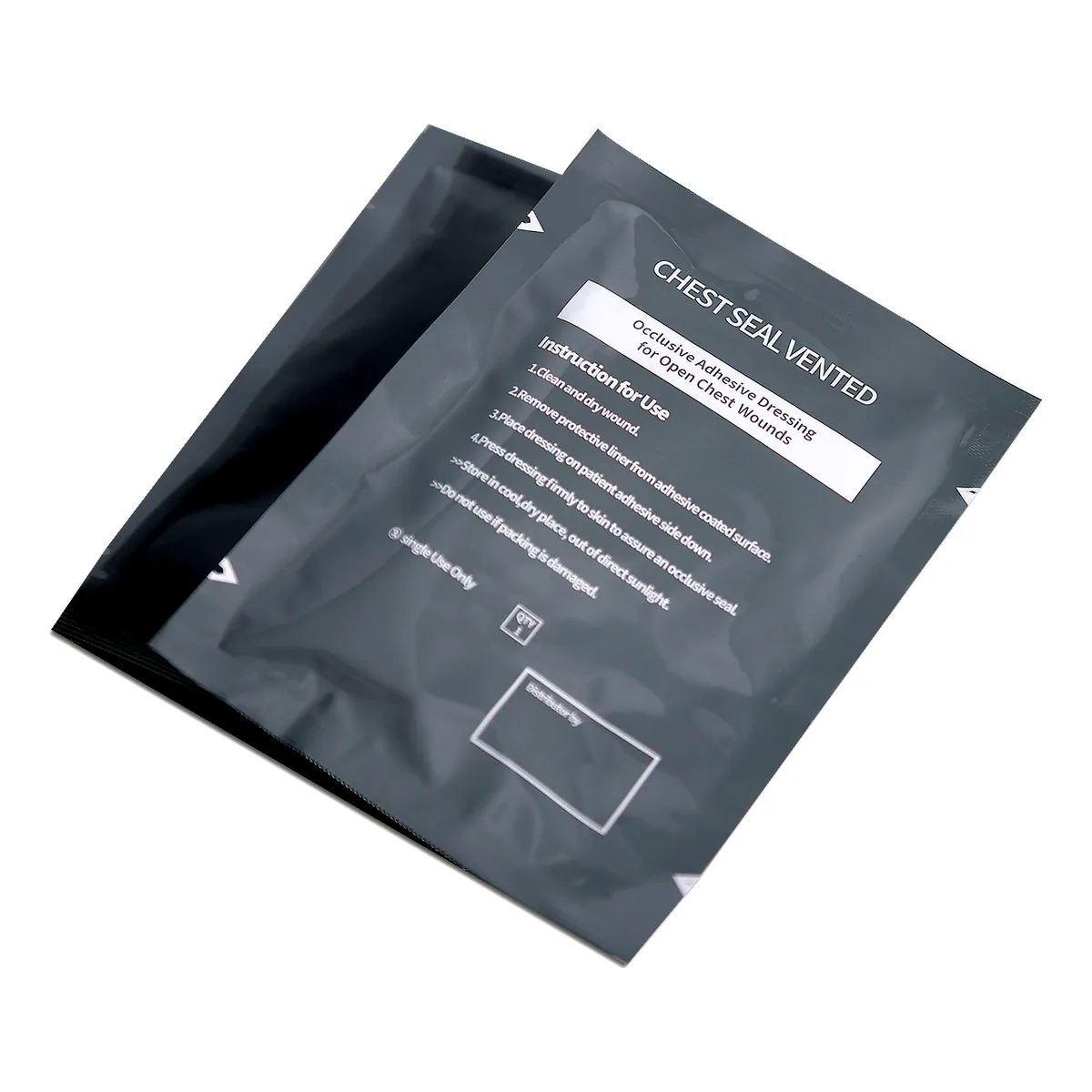
Tactical 3-Channel Vented Chest Seal (Twin Pack)
15×15 cm | 3-Channel Vent | -78°C to +60°C Adhesion | Twin Pack
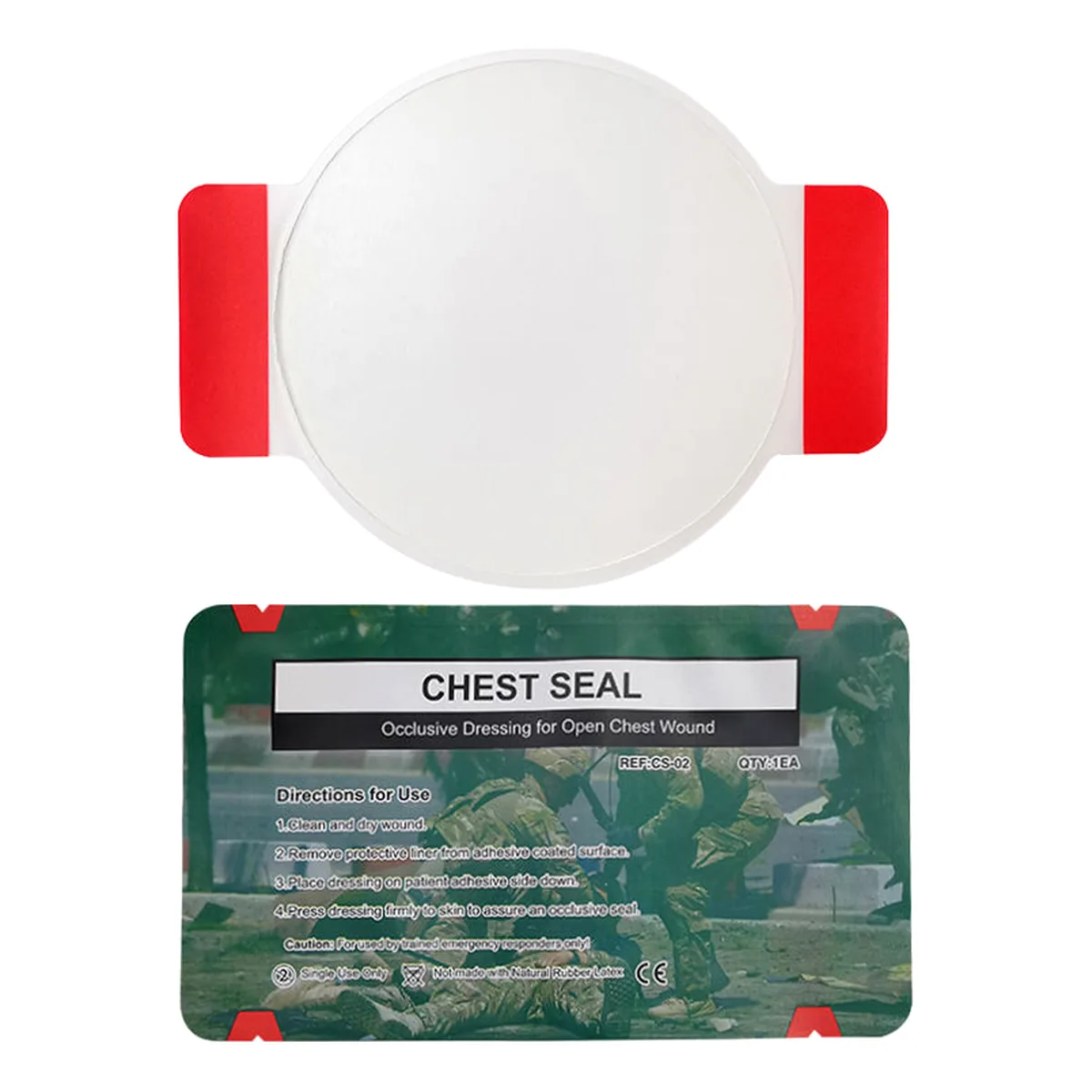
Tactical Non-Vented Occlusive Chest Seal
15 cm Round | 100% Occlusive Barrier | Blast Trauma
Frequently Asked Questions
Critical clinical, regulatory, and procurement answers for international buyers.
Related Topics & Equivalents
Ready to Reduce Procurement Costs by 40–60%
with Primary Factory Direct Sourcing?
Submit your technical requirements or target quantities. Our defense engineering team will confirm your evaluation plan within 24 hours and dispatch test sample kits worldwide.